Hope Builders Group
Join a Hope Builders Group to find the connection and support you need to grow your relationship with Jesus Christ.
__largepreview__.webp)
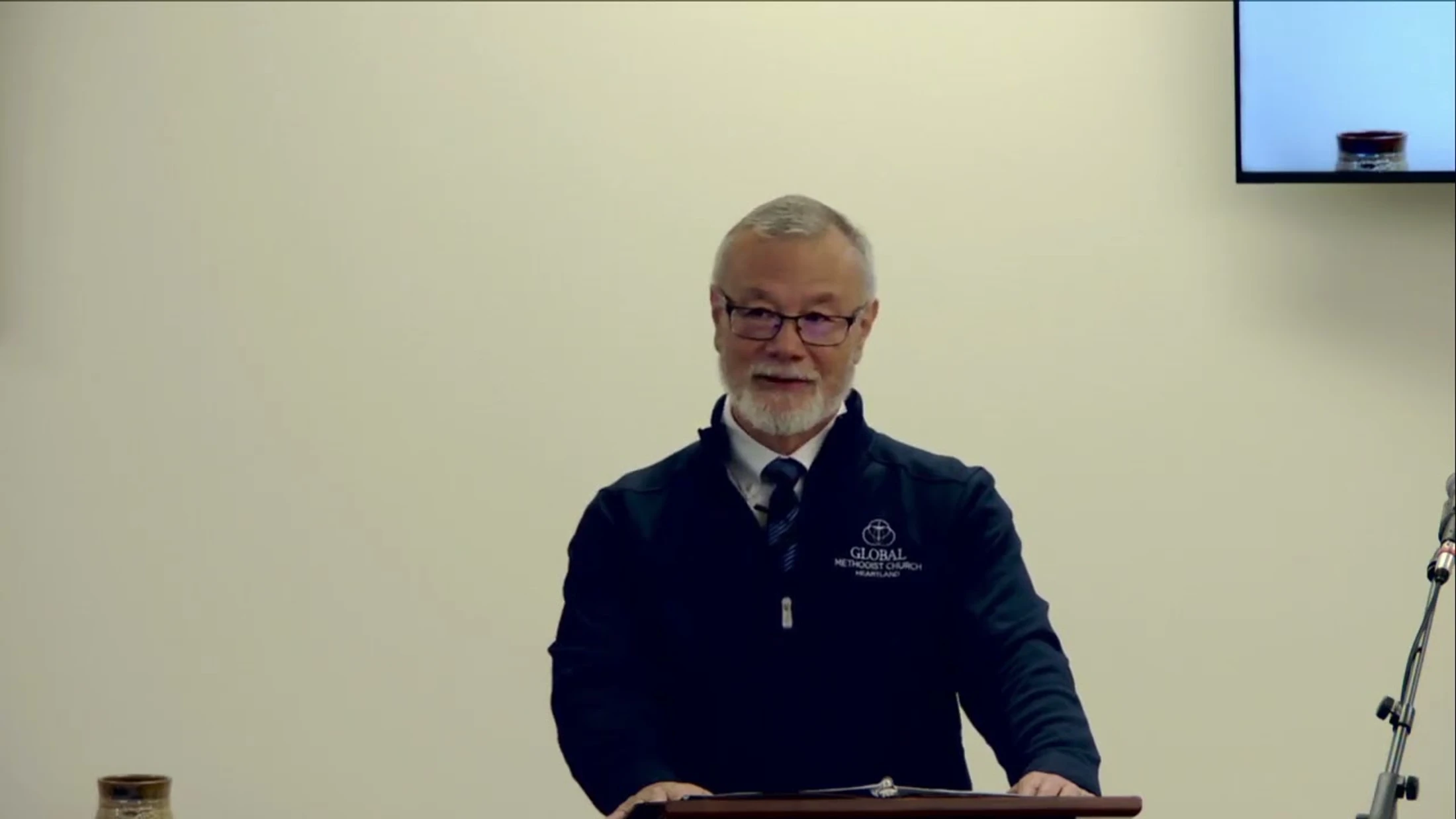
Welcome friends, grace and peace to you in the name of Jesus, the light who came and stayed. So here we are. Christmas Day has passed.
The first Sunday after Christmas, this is it. And like I mentioned before, historically, not that many people are here, but I am glad that so many of you have gathered today to worship. For some of us, Christmas may feel like a blur.
It goes by so fast. And for others, due to circumstances or loss, this year may have felt a little heavier. But no matter what, a moment always comes when the excitement stops, the house gets quiet, and maybe a little too quiet at times.
The presents are opened, and the cookies, candy, or other tasty treats are mysteriously disappearing. A few ornaments may be hanging sideways because someone got a little too excited. And in our house, that would be Micah.
He's very much into the Christmas tree, and we have to watch him all the time. So anyway, that feeling settles in, the one that says, okay, now what? After Christmas is over. Michelle would say, let's take down the tree.
And she'll freely admit that, like at midnight, she's ready to take down the tree usually. But I like to keep it up for a while, maybe I'm a little lazy. It's a lot of work.
But I like the quiet. But really, Christmas is just starting at that time. It's not over.
That's right, in the Christian faith, Christmas doesn't end on December 25th. Christmas goes on in the Christmas tradition until Epiphany, January 6th, the next year. That's 2026.
That's a whole year from, well, not really, but it's next year. But in reality, it keeps going even longer. The real meaning of Christmas is the celebration of Jesus Christ's birth.
This is a pivotal moment in Christianity. It symbolizes God's love, hope, and salvation for humanity. It's often expressed through themes of humility, giving, peace, and light and darkness.
It's about remembering Jesus as a Savior, the fulfillment of prophecy, and a message of eternal life. But it's also about embodying Christ's teachings through love, generosity toward others, this being true. Christmas doesn't end.
It continues all year. The scripture for today comes from John 1, verse 1 through 5 and 9 through 14. So if you'd please stand while I read this scripture.
In the beginning was the Word, and the Word was with God, and the Word was God. He was in the beginning with God. All things were made through him, and without him was not anything made that was made.
In him was life, and the life was the light of men. This light shines in the darkness, and the darkness has not overcome it. The true light, which gives light to everyone, was coming into the world.
He was in the world, and the world was made through him, yet the world did not know him. He came to his own, and his own people did not receive him. But to all who did receive him, who believed in his name, he gave the right to become children of God, who were born, not of blood, nor of the will of the flesh, nor the will of man, but of God.
And the Word became flesh, and dwelt among us, and we have seen his glory, glory as of the only Son from the Father, full of grace and truth. The Word of God for the people of God. Thanks be to God.
So you may be seated. Thank you. So I'm going to start off now with a prayer.
So let's pray. Lord of life and light, may the words of my mouth and the meditations of my heart be pleasing to you, my rock and my redeemer. Bless this gathering of your followers.
May we understand your word to our benefit and your glory. As we worship today, I ask for your presence in, around, and with us. May your spirit guide us today as we continue to celebrate Jesus' birth.
I pray all this in Jesus' holy name. Amen. So a few years back when I was a candidate for a licensed local pastor, I had to meet with the board of ordained ministry and be interviewed.
The panel was made up of clergy people and one lay person. There were five or six of them sitting at a table, I can't really remember for sure, because I felt like I was in a hot seat, right? One of the first questions I was asked was, what is your favorite Bible verse? You know, I didn't hesitate. I said John 1.1. And then I said, in the beginning was the word, and the word was with God, and the word was God.
And what do you think they said next? Why? Right? So I explained while I'm sitting, that while I'm sitting in church during the Christmas season, I often get the feeling that people think that Jesus appeared on the scene when Mary gave birth and he was putting a major. I know that's not true. You see, Jesus is part of the Trinity.
He always was and always will be. He was, is, and will be God. I went on to say he was with God in the beginning.
Through him all things were made. Without him nothing was made that has been made. I kept going, comparing that verse to Genesis 1, verses 1 and 2, which says, in the beginning God created the heavens and the earth.
Now the earth was formless and empty. Darkness was over the surface of the deep, and the Spirit of God was hovering over the waters. I concluded by saying John 1.1 and Genesis 1.1 and 2 describe the Trinity.
And the eternal, all-powerful, and loving nature of God. The layperson interviewing me said, thanks for that answer. It's not every day during these interviews that I learn something.
Christmas begins at Christmas. Begins at Christmas. And the scripture we read today from John tells us why.
John's Christmas story is big and bold and cosmic. Now John doesn't give us a baby in a manger. He doesn't mention Mary, or Joseph, or angels, or shepherds.
John gives us something bigger. The Christmas story that existed before Bethlehem. John starts with, in the beginning was the Word, and the Word was with God, and the Word was God.
Before there were trees or planets. Before there were shepherds or angels. Before Bethlehem had a name, Christ already was.
John wants us to understand that Jesus doesn't just show up in history. He creates history. He shapes it.
He holds it together. Christmas isn't God's plan B. It's God stepping right into the timeline he created and saying, I'm not watching from a distance. I'm coming close.
You know, John Wesley loved this. He called it the grand miracle. Not just God being God far away, but God becoming human, fragile, touchable, huggable, being Emmanuel, God with us.
Because here's the truth. If Jesus were just a wise teacher, or just a good example, or just a special baby, we would be in the dark. But if Jesus is the eternal Word, the one who spoke light into darkness at creation, then he can speak light into your darkness too.
In him was life. When John writes in him was life, he uses the Greek word zoe. And there's also a Greek word bios, but he didn't use that because that bios is the physical life that measures our years and sustains our bodies.
Zoe speaks of life as God intends it. Life that flows from God's own being. Life that is eternal in quality, not just endless in duration.
John tells us that this zoe is in him, in Otto. Life doesn't originate in human effort, religious performance, or moral striving. It resides in Christ himself.
Jesus does not simply give life, he is life. All true life finds its source and its sustenance in him. This is deeply Methodist theology.
John Wesley preached that before we ever seek God, God is already seeking us. That is prevenient grace at work. God's zoe already stirring within us, drawing us toward repentance, faith, and renewal.
So even when we feel spiritually dry or exhausted, the life of Christ has not run out, the well has not gone empty. This life is not static. The verb John uses was end, is ongoing.
Christ's life continually exists and continually flows. His life awakens us, justifies us, sanctifies us, and sustains us day by day. As we abide in him, that life becomes visible, shaping our lives, shaping our choices and our witness.
To live as Christians then is not simply to survive, but to participate in Christ's zoe. We open ourselves to the life that heals what is broken, restores what is weary, and makes us whole. So let's move on to one of the most famous lines of all scripture, the light shines in the darkness, and the darkness did not overcome it.
You know, every year during Advent and Christmas, we talk a lot about light. We light candles, candles on wreaths, lights on houses, lights on trees, lights in windows, but John isn't talking about decorations. He's talking about something much deeper.
Jesus is light, and the darkness doesn't get the last word. Now we know darkness. We do, some of us more than others.
Some of us have met it at crime scenes. We've met it in hospital rooms. We've met it in phone calls we didn't want to receive.
We've felt it in during sleepless nights, thinking about bills or relationships or decisions we don't know how to make. We've walked with it through grief, loneliness, worry, regret, stress, and pain. Darkness is real.
John knew that. Jesus knows that, but John's telling us darkness doesn't get the final say, not in your life, not in your family, not in your future, and not in this world. The scripture says the light shines, present tense.
It's ongoing, and darkness, no matter how deep, can't blow it out. So let me tell you a quick story. Earlier this year, I attended a memorial service at the courtyard of the Wyandotte County Courthouse.
Deputy Elijah Ming had been murdered while responding to a domestic violence call. He was shot. Well, anyway, hundreds of people gathered at the courthouse that evening, and part of the service was lighting candles to demonstrate the light of Christ, kind of like we did on Christmas Eve.
Well, halfway through, a gust of wind hit us, and candles flickered everywhere, and hands went to cover them to protect them from the wind. There was a young man near me, and he held his candle like his life depended on it, shielding it from the wind, and when the service ended, he said, my candle didn't go out, no matter what. That's John's message.
That's Christmas. The light is stronger than the wind, stronger than the darkness, stronger than everything that tries to put it out. So next comes the heart of the passage, the word became flesh and lived among us.
Now, that word lived is actually practically pitched a tent, set up a camp, moved into the neighborhood. Jesus didn't dip his toe into humanity. He plunged all the way in.
He experienced hunger, fatigue, frustration, friendship, temptation, tears, loss, the whole thing. And why does that matter? Because when you pray, you're not talking to a God who says, well, I can't really understand that. Jesus knows.
He's lived it. And this is why Wesley said, the incarnation doesn't just comfort us, it transforms us. If God truly took on human life, then human life can truly take on God's grace.
John says, Jesus came full of grace and truth. Grace says, you are loved right now, even in the mess. Truth says, I am calling you into something better.
Grace says, you're forgiven. Truth says, let's grow. Grace says, you belong here.
And truth says, let's walk forward. And Jesus never sacrificed one for the other. He didn't choose between them.
He held them together perfectly. We need that, don't we? We need a Savior who can embrace us without enabling us, who can teach us without shaming us, and who can stretch us without breaking us. That's Jesus, full, full of grace and truth.
Then John says, to all who received him, he gave the right to become children of God. Notice that it doesn't say to all who understood him, or to all who had perfect theology, or to all who got it right all the time. It simply says to all who received him.
Receiving Christ is just opening the door, opening the hands, opening the heart, letting him be who he is. Wesley described it this way. Grace kind of wakes us up.
Repentance turns us around. And faith receives Jesus. And holiness grows from that relationship.
So a woman once said, you know, when I was younger, I thought of Jesus as a Christmas visitor. He'd show up, I'd feel something, then he'd leave. She paused and said, but I'm older now.
And I've walked through things I didn't think I could survive, and I realized he never left. That's the difference between Christmas feelings and the Christmas story. Feelings fade, but his presence remains.
So let's be honest. The week after Christmas can feel strange. You step outside and the world looks the same.
Bills still need paying, dishes still need washing. The problems didn't magically disappear. So what does Christmas change? Everything, if we let it.
The world didn't suddenly become perfect when Jesus arrived. But Jesus arrived in an imperfect world and brought perfect light. And he's still doing that right now in your life, in your home, in your worries, in your hopes.
Jesus doesn't stay in Bethlehem. He grows up, he walks into towns and villages, he heals, he comforts, he challenges, he loves, and Jesus saves. And he keeps doing that today.
Christ walks with you into your job, your appointments, your decisions, your relationships, your fears, your grief, your responsibilities, and your future. So what does it mean to carry this light forward? First, we walk in the light. Let Jesus shine into places that have been in the shadows, in your decisions, in your habits, your hurts, your stresses, your secrets, your relationships.
Light doesn't shame us, it frees us. Share that light. Wesley said, there is no holiness but social holiness, which means holiness always spills over into how we treat people.
The world needs light and you might be the only candle that someone gets to see. A gentle word, a patient response, a forgiving spirit, a generous heart, a listening ear, a helping hand, that is light. So welcome the light, let God grow you, let God challenge you, let God heal what's been broken for a long time.
Grace isn't passive, grace is God working in you. And trust that light, that's a big one. Even when things feel uncertain, even when darkness is loud, even when the future feels foggy, you have to trust that light.
Because the story of John 1 is not the light showed up once and left, it's the light still shines and the darkness cannot overcome it. So let's slow down just for a second. Think of one place in your life, just one where you need Christ's light.
You don't have to raise your hand or shout it out, please don't. It may be a relationship that needs healing, a fear that's been weighing on you, a habit you're tired of fighting, a grief you're carrying quietly, a decision you're unsure about, a place where you feel stuck, a place where you feel alone. Hold that place in your mind.
Now hear this truth, the light shines in the darkness and the darkness cannot overcome it. Not will not, not might not, cannot. John finishes this passage by saying, we have seen his glory.
Not just ancient shepherds, not just the disciples, not just people long ago, you can see his glory. You can know his presence. You can carry his light.
Christmas doesn't end just because Christ doesn't leave. The light that stepped into the world steps into your world, steps and into this church and walks with us into the new year. So as we leave Christmas behind and walk into 2026, may we walk with confidence, with hope, with joy, and with the light that does not fade.
In the name of the Father, and the Son, and the Holy Spirit, amen.